

Unit 23 Human Computer Interaction
Human Computer Interaction (HCI) deals with the way people interact with technology. How do we input information into, and receive information from, computers and other digital devices? One of the biggest changes in the last 20 years has been the introduction of the graphical user interface and in many respects this has revolutionised the ways in which we interact with computerised devices such as smart phones, PC's and digital TV for example.
On completion of this unit a learner should:
1 Know the impact of HCI on society, the economy and culture
2 Understand the fundamental principles of interface design
3 Be able to design and implement user interfaces.
Firstly, this unit explores the impact of HCI on society, the economy and culture and looks at how HCI has developed and where it might be going next.
Secondly, the unit combines elements of HCI theory with learners’ practical skills to enable them to design and implement user interfaces for input and output, using an application or a programming language of choice. Learners will evaluate interfaces and measure their effectiveness both quantitatively and qualitatively.
Learners will need to demonstrate a range of skills. Examples of which are shown below;
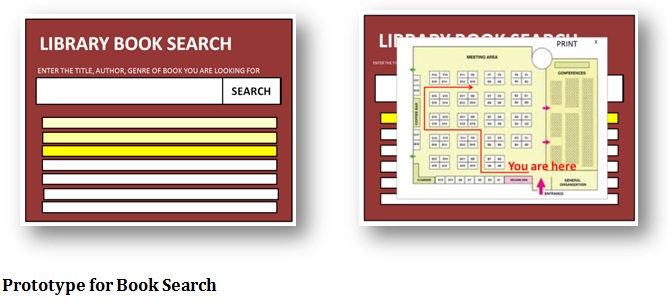

The above design has movements that were implemented on the screen.
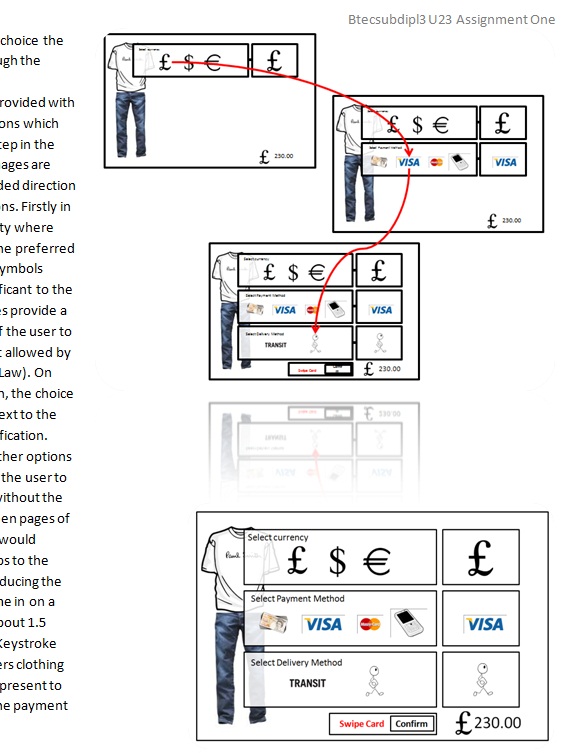
The above shows design and analysis of the purchase sequence.
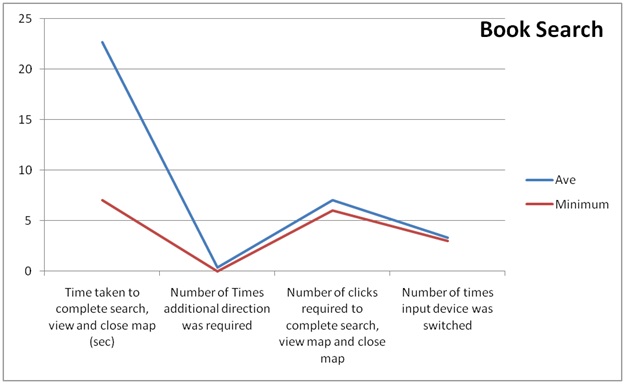
Analysis of the designs are required by testing your prototypes on several users.
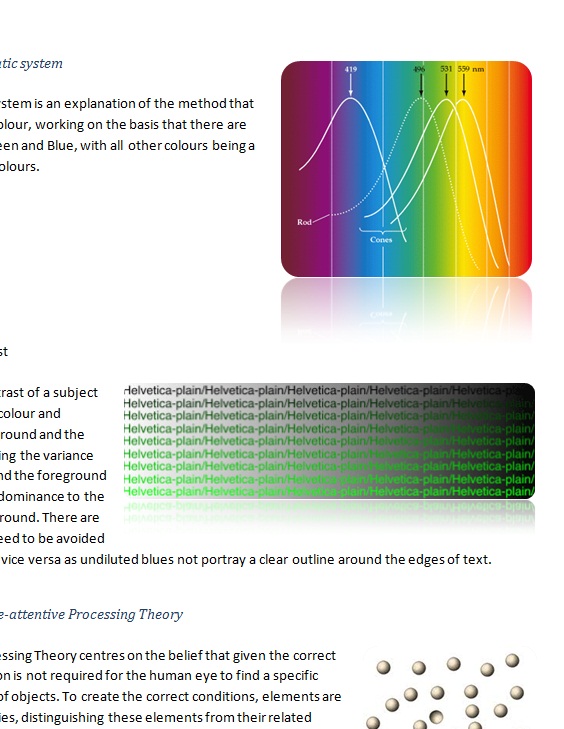
The above are the extracts of work from James Mitchell.